Rommel’s Playbook: How a 6-Person Startup Is Disrupting Global CBRN Defense
Velocity beats mass. Innovation defeats budget.

Resource-constrained environments breed breakthrough innovation — the desert fox principle applied to defense-tech entrepreneurship. Photo: Unsplash (CC0)
The Desert Fox Who Redefined What’s Possible With Nothing
Field Marshal Erwin Rommel (1891–1944) should not have been able to threaten Cairo with a fraction of the supplies his opponents commanded. His Afrika Korps operated at the edge of logistical collapse throughout 1941–42 — yet Rommel consistently outmaneuvered a numerically superior, better-supplied British Eighth Army. The reason was not firepower. It was velocity, improvisation, and a refusal to accept the constraints everyone else considered permanent.

The Desert Fox’s inner calculus: what cannot be supplied must be improvised. A doctrine that defines UAM KoreaTech’s approach to CBRN technology development. Photo: Unsplash (CC0)
Rommel’s Inner Landscape: a visceral belief that velocity compensates for mass. His Environmental Read: operated in resource scarcity as a forcing function for creativity. His Differential Factor: used captured enemy equipment, adapted enemy doctrine, moved faster than headquarters could track. His Modern Bridge: UAM KoreaTech — a 6-person team building zero-water, zero-energy autonomous CBRN decontamination that defense giants missed.
Why the Defense Giants Missed It
The global CBRN defense market has been dominated by large primes for 40 years. Wet decontamination systems requiring 30+ personnel and 500 gallons of water were built by organizations with no incentive to solve the problem differently. The U.S. Army ADS RFI identified the D-M-D-A-V pipeline requirement — yet no established defense contractor delivered it. The gap wasn’t technological. It was institutional.

CBRN-CADS: built not in a defense lab with a €500M budget, but by a 6-person team applying the Rommel principle to defense technology. Photo: Unsplash (CC0)
The Partnership Architecture That Changed the Equation
BLIS-D integrates with Anduril’s Lattice platform — hosting the world’s first CBRNDecontaminate Task definition. Palantir Foundry provides the data backbone: a 6-entity CBRN ontology covering Contamination Zone, Decon Asset, Decon Mission, Plume Prediction, Decon Assurance, and Damage Assessment. SwissDrones AG’s SDO 50 V3 provides the aerial platform. The result is a MUM-T architecture that scales from a single soldier to a full NATO joint operation. Rommel captured British trucks when his own broke down. UAM KoreaTech partnered with Palantir and Anduril when the establishment said it couldn’t be done at startup scale. The EU EDF 2026 allocated €110M for exactly this kind of CBRN autonomy.
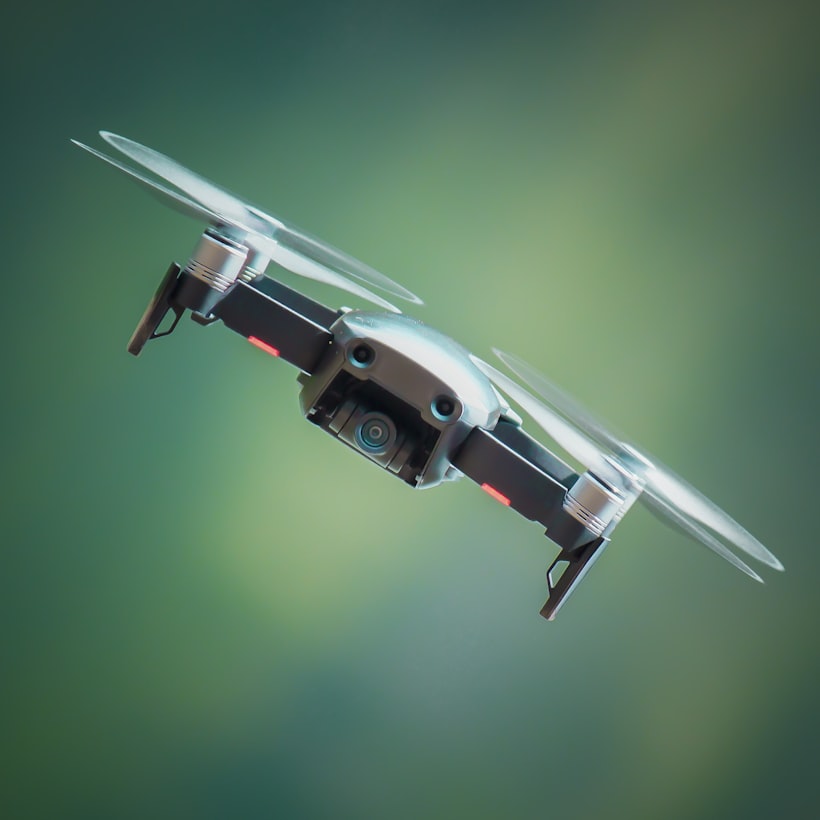
The three-tier MUM-T architecture: SwissDrones SDO 50 mothership, micro-drone recon swarm, Lattice command integration — built at startup speed. Photo: Unsplash (CC0)
What Rommel Would Have Called This Technology
Rommel’s final lesson isn’t about tactics. It’s about seeing constraints as design briefs. UAM KoreaTech’s 8-layer patent fortress — BLIS-D, CBRN-CADS, DDC blockchain certification, Lattice integration — was built under resource constraints that most defense programs would have used as an excuse to stop. If Rommel had had access to a single-operator autonomous CBRN decontamination drone, he wouldn’t have called it a force multiplier. He would have called it a battlefield equalizer.
Leave a Reply