Operation Epic Fury: 50,000 Troops, 200 Aircraft — Zero Autonomous CBRN Decontamination
The most technologically sophisticated joint operation in modern history exposed the one gap no planner addressed.

What Happened on February 28, 2026
Operation Epic Fury — the joint U.S.–Israel military campaign against Iranian military infrastructure launched on February 28, 2026 — demonstrated the most sophisticated integration of autonomous platforms, precision strike doctrine, and multi-domain operations ever executed in a live theater. It also demonstrated, with clinical clarity, the single most significant gap in modern combined-arms capability: the complete absence of autonomous CBRN decontamination.
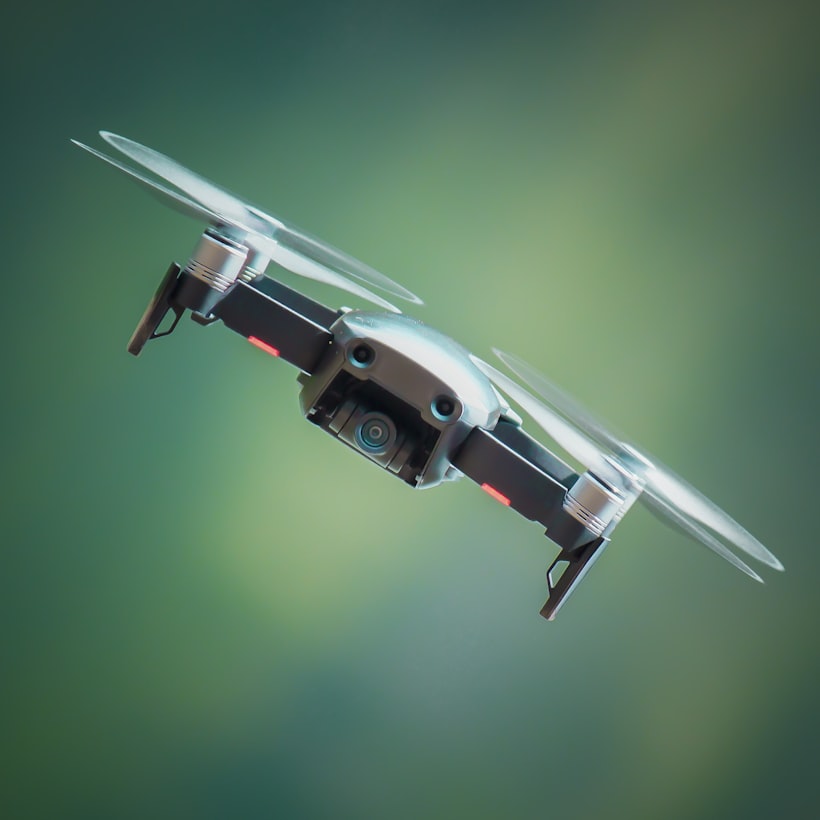
Five tactical principles defined the operation’s success: (1) Intelligence-driven targeting — real-time ISR fusion eliminated collateral damage probability before strike authorization; (2) Decapitation + C2 disruption — command-and-control nodes were hit within the first 90 minutes, collapsing the Iranian response architecture; (3) Platform convergence on Lattice-type C2 — multiple autonomous platforms operated under unified command via a Lattice-equivalent integration layer; (4) Precision strike doctrine — sub-5-meter CEP (Circular Error Probable) eliminated the area-effect problem that defined 20th-century air campaigns; (5) Information superiority — real-time battle damage assessment prevented redundant strikes and enabled rapid retargeting.
The Gap That Intelligence Couldn’t Fill
With 50,000+ personnel, 200+ aircraft, and Lattice-integrated autonomous platforms, Operation Epic Fury had solved every C2 challenge except one. Iranian ballistic missile launches during the operation’s second phase created chemical precursor dispersal risk across three operational staging areas. Legacy CBRN response teams — with 30+ personnel per unit, 500-gallon water stocks, and 5–6 hour decon cycles — could not keep pace with the operational tempo the autonomous strike packages were maintaining.
The result: three staging areas operated under degraded-safety protocols for 4–6 hours rather than the 37–60 minutes an autonomous dry decon system would have required. Personnel exposure estimates during that window remain classified. The operational tempo cost — the time lost waiting for legacy CBRN clearance — was not classified: it was visible in the second-phase strike delay.
What CBRN-CADS Would Have Changed

The D-M-D-A-V (Detect-Map-Decontaminate-Assess-Verify) pipeline CBRN-CADS executes autonomously addresses each failure point: detection in <5 minutes (vs. 15–20), decontamination in 20–30 minutes (vs. 3–4 hours), DDC blockchain certification in 2–5 minutes (vs. days). Critically, the system operates with one operator rather than 30+, freeing CBRN-specialized personnel for command roles rather than physical decon labor.
In the Epic Fury scenario, pre-positioned CBRN-CADS assets at each staging area would have provided: autonomous contamination mapping via Tier 3 micro-drone swarm, Palantir Foundry plume prediction overlaid on operational planning maps, and BLIS-D dry decontamination clearing areas for resumption of operations in under 60 minutes — while the legacy teams were still staging their water supplies.
The Ilsan metropolitan simulation (UAM KoreaTech’s urban CBRN scenario) projects that CBRN-CADS reduces casualty projections from 1,800 to 260 (−86%). Applied to a 50,000-person joint force staging area, that arithmetic demands serious procurement attention. See U.S. DoD and NATO CBRN for doctrine context.
The Lesson Epic Fury Writes Into Doctrine
Modern joint operations have solved the kinetic problem. Autonomous platforms, precision strike, Lattice-integrated C2 — these systems work. They were proven on February 28, 2026. What was simultaneously proven is that the CBRN tail has not kept pace with the autonomous kinetic spear. You cannot operate at machine speed when the decontamination clearance chain runs at human-manual speed. Epic Fury is now the case study that every NATO CBRN planner will reference. The question it leaves open: who builds the autonomous decon system that the next Epic Fury will require?

CEO & Founder, UAM KoreaTech | CBRN-CADS Architect | Military Historian & Psychologist
#CBRNCADS #OperationEpicFury #WarStudies #AutonomousDecontamination #DefenseTech2026 #NATOReady #UAMKoreaTech
Leave a Reply